
Written by Clara Cho (LinkedIn)
What PIOs can do to help researchers connect with the public
I recently attended Scientifica, Switzerland’s largest public science fair, expecting to immerse myself in the wonder of research and innovation. What I didn’t expect was how much I would reflect on this experience afterwards.
Held every 3 years by ETH Zurich and the University of Zurich, Scientifica makes research and innovation accessible to the public. Besides the usual campus locations in the city of Zurich, there was also satellite activity going on at the Switzerland Innovation Park in the outskirts of Zurich city.
What struck me the most was the fact that I could walk into a space that I would normally never enter and get a glimpse of the discovery, the mechanics and the science that happens there.
Usage Restrictions: May not be repurposed without Clara Cho’s consent.
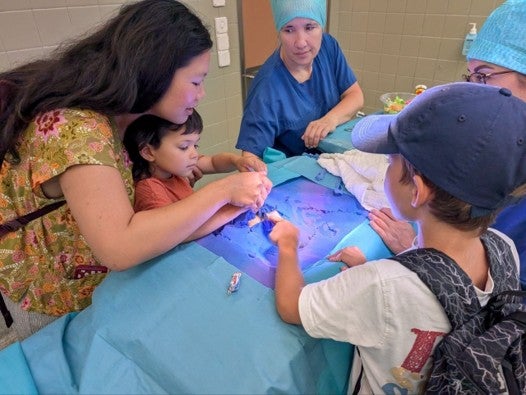
Just a week later, I found myself at an open day of a hospital in the suburbs of Zurich. I was in an operating room, guiding my son’s hand with tweezers as we tried to take candy out from a model body, and drilling screws into practice bones.
These interactive experiences may sound easy, but they honestly weren’t. I truly developed a deeper appreciation of the precision and training involved in procedures that, as a patient or visitor, we normally only see from outside or through videos. It also made me realize how much labwork and healthcare practices remain invisible to the public eye.
While Scientifica and the open day at the hospital gave me two distinct experiences, they left me hanging on one thought: what can people understand about science when they are offered the opportunity to experience it, instead of only hearing about it?
As someone working in communications and currently supporting innovation initiatives at the University of Zurich, this question made me reflect about the role of public information officers (PIOs) and how we can bring science and innovation beyond the confines of the lab.
I wasn’t involved in organising Scientifica this time, so I am not able to speak to the experience of running the festival itself. However, through university-wide communications, I learned that there was an internal call in 2025 to all departments and faculties for projects, through which researchers and research groups could submit ideas to be presented at the festival.
It is easy to associate science communication as something that happens once the research has been completed and there is a need to promote the publication and the scientists behind the work, perhaps through social media or a press release. My recent experience prompted me to think about how we can create more opportunities for researchers to engage directly with the public while the scientific inquiries are in progress.
Creating opportunities for researchers to engage
Scientifica has shown that large public engagement events can bring institutions together to give research a public stage, opening the doors to worlds of expertise that people might otherwise never encounter. For PIOs, this creates an opportunity to help researchers think about how their work can be shared in ways that invite non-experts in, spark curiosity and encourage interaction.
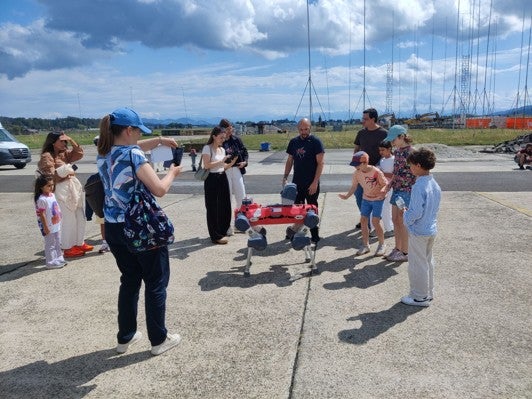
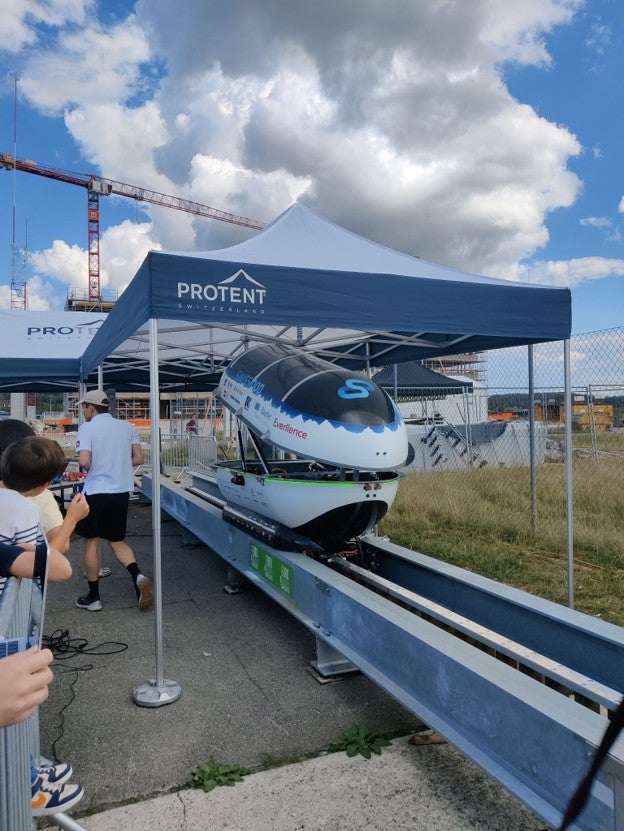
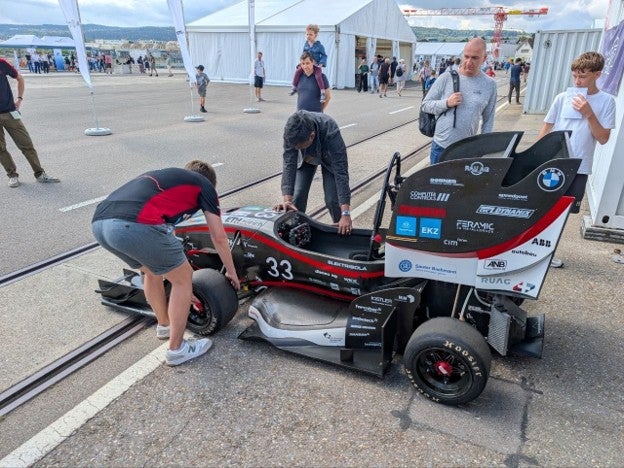
All images courtesy of Clara Cho. Images may not be repurposed without Clara Cho’s consent.
An internal call for projects may seem like a relatively simple mechanism, but it can inspire researchers to think about how public engagement could be an integral part of the work that they do. In addition, communications and event teams have a great opportunity here to identify interesting stories and projects, and leverage them to develop an impactful and engaging program and post-event reflections.
For PIOs, this could mean asking questions like these:
- Are we creating enough opportunities for researchers to engage with the public, before or in-between the usual milestones such as publications?
- Are our researchers aware of such opportunities?
- Is it clear to the researchers that they do not need to turn their research into a lecture in order to participate?
- What can we as PIOs offer, in terms of resources, knowledge and hands-on help, that would encourage scientists to engage with the public more in this way?
My personal experience at Scientifica helped me realize that the most interesting way to engage the public with hard science could begin with giving people something to look at, feel, try, explore or ask about.
From communicating research to enabling encounters
The role researchers played in making Scientifica such an inspiring event is invaluable. I was reminded that research and scientific discovery is not a standalone, abstract activity happening galaxies away. No, the research is carried out by people, using tools and technology, asking questions and trying to solve problems. Looking at science and research from such a point of view can offer visitors a different reference point for understanding what goes on in the laboratory – and ultimately, instill trust in science.
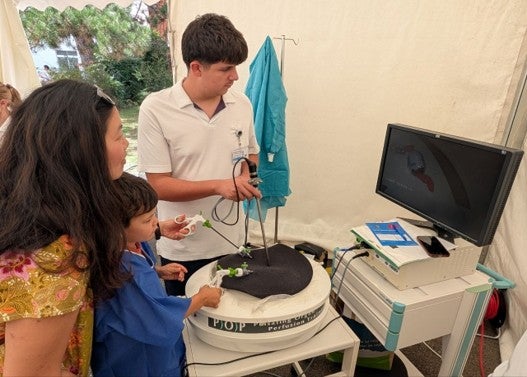
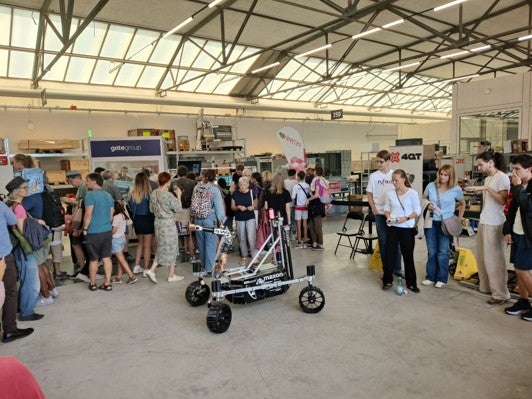
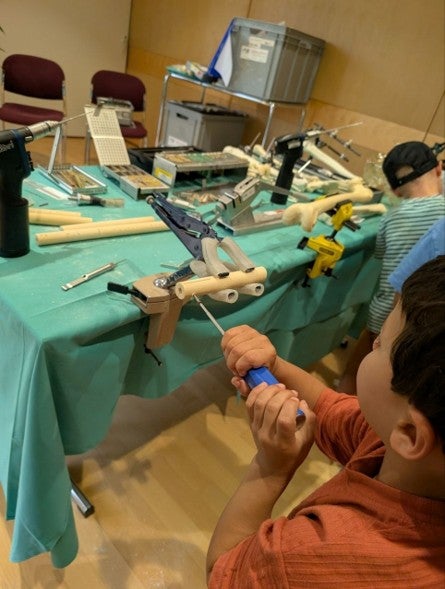
All images courtesy of Clara Cho. Images may not be repurposed without Clara Cho’s consent.
For us as PIOs, this suggests that our function goes beyond merely event promotion. Interactive science gives us an opportunity to help researchers open up their work to people who would not normally have access to it, and invite the public into their world of expertise by appealing to their senses.
Combining our creative skillset with perhaps a non-expert point of view, we can support researchers in identifying what might capture someone’s curiosity. We can encourage them to reflect about what people could see or experience, rather than what they could be told. Engaging with the public is a two-way street, where explaining the research is just as valuable as listening to what questions people may have. This is a powerful feedback loop that could even enhance the research in return.
Following this train of thought, a public engagement event does not necessarily mean the end of the communication process or activity. The questions asked by visitors and the live demos that captivated audiences or surprised visitors have great potential for developing social media and video content, or other forms of engagement.
Final thoughts
Until now, I had not actually stopped to think carefully about what it means to “bring science closer”. Personally, I always understood it as making research more accessible, for example, translating complex ideas with simple terms or with relatable graphics, without a more in-depth consideration for the phrase.
Having experienced Scientifica and the open day at the hospital helped me consider a different perspective. Sometimes, bringing science closer to the public can literally mean opening a door and letting people try something out for themselves.
PIOs can leverage our strengths in communications and stakeholder engagement to build collaborations and create opportunities for people to step into worlds they would otherwise only encounter from the outside, giving them a glimpse of how science is actually done.
About the author

Clara Cho is a Zurich-based communications and events professional with a background spanning research and innovation, non-profit organisations, and international business. Her work sits at the intersection of people, ideas and communication, with a strong interest in how science and innovation can be made more accessible beyond the lab.